
Play is the answer to how anything new comes about.
— Jean Piaget
The first day of teaching a 10-week yoga programme in a primary school in Greater Manchester, I felt both excited and curious. I began, as I often do, by asking:
“What is yoga to you?”
Their answers came instantly:
“Stretching!” “Breathing!” “Flexibility!”
At the end of the session, I asked:
“How do you feel?”
“Calm!” “Relaxed!” “Happy!”
It was clear that many of them had practised yoga before. They arrived with familiar words for it. I noticed the difference between repeating what yoga is supposed to be and discovering how it feels. I approached the sessions as spaces for exploration rather than performance.
From Scripted to Felt
By week four, their responses began to widen. When I asked how they felt after practice, the answers came more slowly:
“Sleepy.”
“Strong.”
“Sad.”
“I don’t know.”
Rather than rushing to respond, I allowed these words to sit as descriptions.
One boy compared yoga to being on Mars, shaping his body like a spaceship, ready to take off. For him, yoga became imaginative play rather than a set of instructions.
The Forward Fold and the Belly
One afternoon, while we were “being caterpillars,” I offered a simple forward fold. Some children folded easily; others adapted the shape. One girl paused midway, touching her stomach and saying:
“I can’t because of my belly.”
I mirrored the movement and said, “I can’t go all the way forward either.”
We folded slowly, stopping where it felt comfortable.
“How does that feel?” I asked.
“My back hurts.”
“Then come back a little.”
Together, we explored choice and listening within movement, without comparison or correction. Her smile reflected comfort rather than achievement.
The Mandala Game
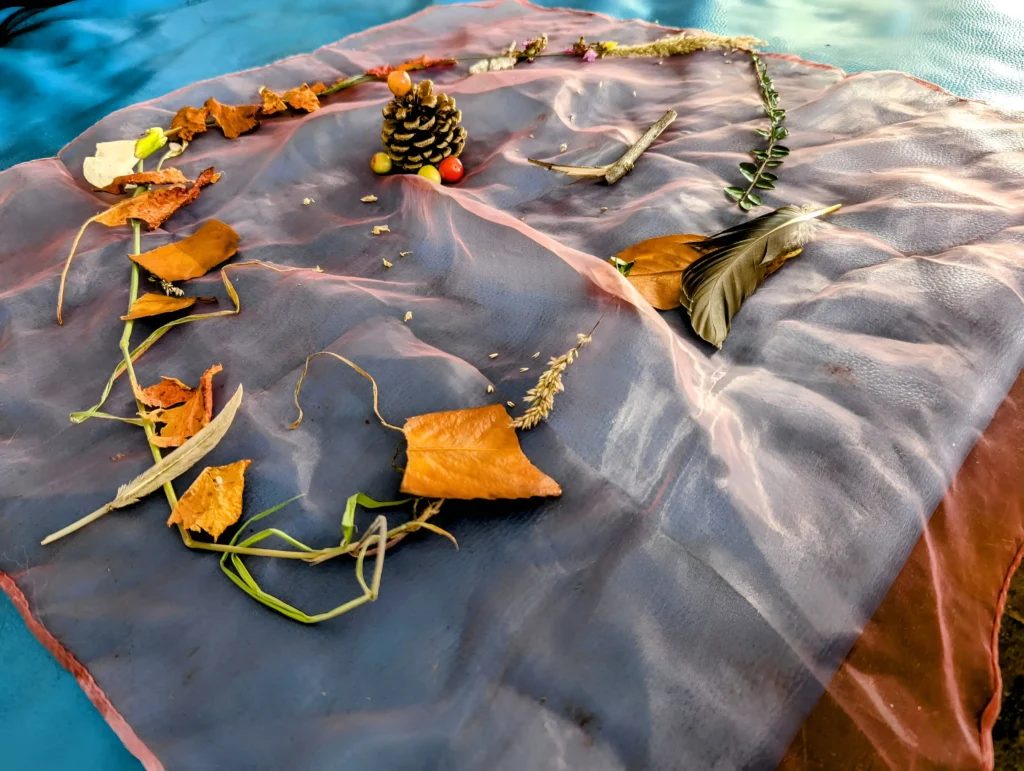
One day I brought natural objects from nearby woods: pinecones, stones, flowers.
Children chose whether to be blindfolded, close their eyes, or look down.
They explored the objects and then created mandalas, some individually and some together. The activity supported focus, cooperation, and sensory awareness, allowing each child to engage at their own pace and in their own way.
Closing Reflection
Facilitating yoga with children in the UK showed me how easily it can become something to get right. Many arrived with ready-made answers about what yoga should look like or sound like.
Within the sessions, however, yoga became something they could explore through movement, breath, imagination, and rest. A forward fold became a way of listening to the body. A mandala became a way of organising attention.
Little by little, yoga shifted from something to describe correctly into something to experience personally. That, to me, is where learning remains grounded, respectful, and appropriate.
*All project descriptions are anonymised and shared with consent where required. No participant-identifying information is included.